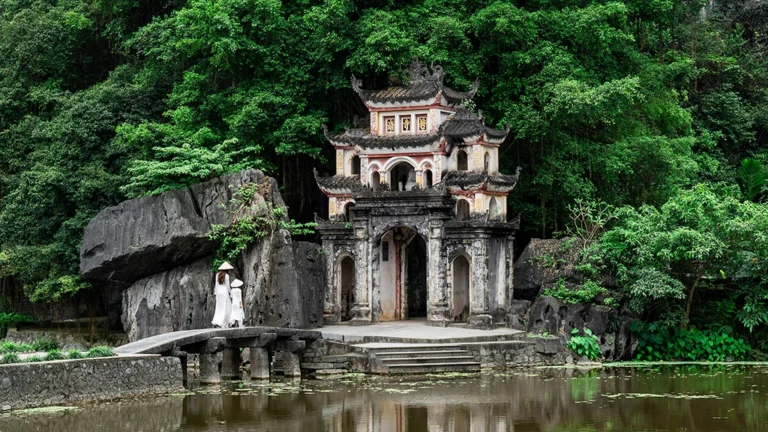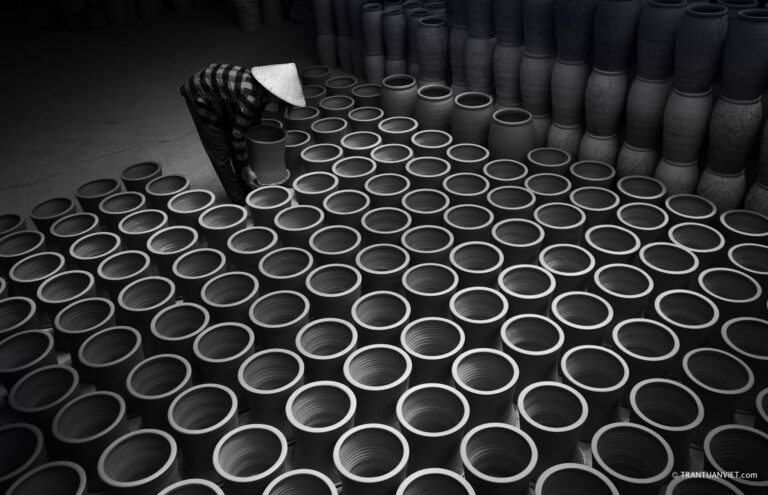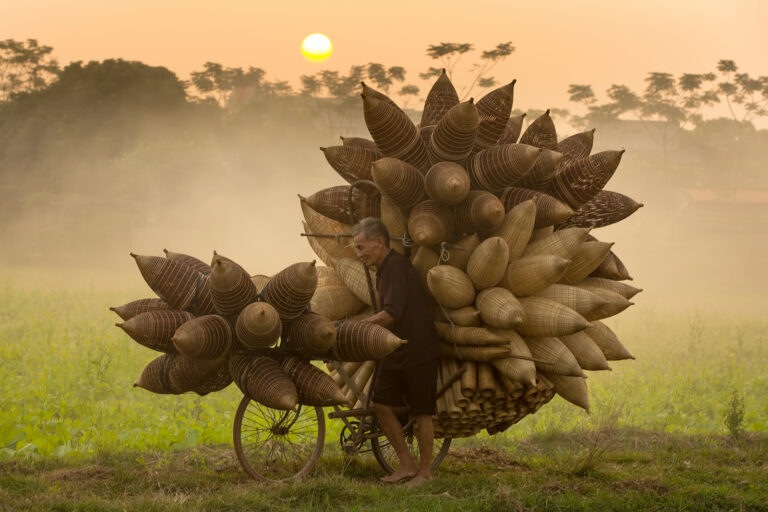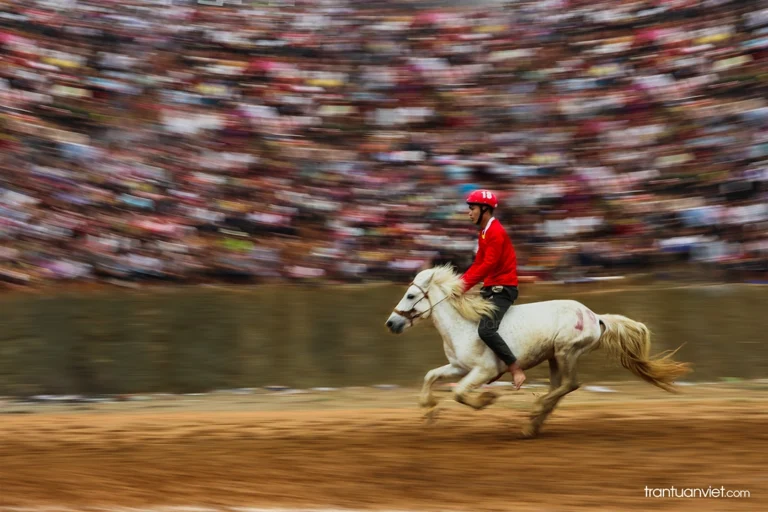
Vietnam is more than a destination—it’s a multi-layered narrative of resilient traditions, dramatic landscapes, and high-energy street scenes. For a photographer, the challenge isn’t finding a subject; it’s organizing those subjects into a visual story.
Whether you are capturing the “Golden Season” in the mountains or the blue-collar grit of a Hanoi market, building a narrative helps your work connect emotionally with an audience. Here is how we approach storytelling in our Vietnam photo workshops.
1. Define Your Narrative Arc
Before you press the shutter, you must define the story. Visual storytelling isn’t just about pretty colors; it’s about context and continuity.
- The Workshop Approach: We treat a photo series like a short film. We ask:
- What is the “mood” of this place? (e.g., the quiet dignity of a mountain farmer vs. the frantic energy of a fish market).
- What is the “beginning, middle, and end” of this scene?
2. Choose Your Narrative Lens
A strong visual story requires a specific focus. During our Vietnam photo tours, we encourage participants to pick one of three “lenses”:
- The Portrait-Driven Story: Focus on a single character, such as a vendor in Hanoi’s Old Quarter. Show their face, their hands, their tools, and the customers they serve.
- The Sense of Place: Tell the story of a location, like the misty, limestone plateaus of Ha Giang. Use wide vistas and architectural details to anchor the viewer.
- The Process Story: Follow a craft from start to finish. A favorite for workshops is the Quang Phu Cau incense village, documenting the raw bamboo being split, dyed crimson, and laid out to dry.
3. The “Shot List” for a Complete Story
To build a cohesive essay, you need variety. We teach the “Five-Shot Rule” inspired by the standards of National Geographic and masters like Tran Tuan Viet:
| Shot Type | Purpose | Example |
| The Establisher | Sets the scene and location. | A wide sunrise shot of the Mu Cang Chai rice terraces. |
| The Relationship | Shows the subject interacting with the environment. | A farmer walking through the golden fields. |
| The Portrait | Captures the character and soul. | A tight, soulful close-up of the farmer’s weathered face. |
| The Detail | Focuses on textures and small elements. | A macro shot of the rice grains or the sickle used for harvest. |
| The Closer | A symbolic image that “ends” the story. | The sun dipping below the mountain ridge. |
Export to Sheets
4. Engage: The “Human Connection” Technique
Strong stories are built on trust. In our private Hanoi photography workshops, we prioritize the interaction before the image.
- The Skill: Learn to sit for a tea, share a smile, and ask for permission. This “soft skill” removes the “camera wall,” resulting in relaxed subjects and intimate, unposed moments.
- Ethical Note: Always respect the local culture. We teach you how to identify when a moment is sacred and should be observed without a lens.
5. Use Light to Direct the Plot
In Vietnam, light is your “narrator.”
- Golden Hour: Best for the “romantic” side of Vietnam—rice fields and ancient towns.
- Midday Harsh Light: Perfect for the “gritty” side—urban street life and high-contrast market scenes.
- Blue Hour: Ideal for the “modern” side—Saigon’s skyscrapers and Hanoi’s lantern-lit alleys.
6. Sequencing: The Art of the Edit
The story isn’t finished until the edit is done. We work with workshop participants on sequencing for impact.
- The Goal: Don’t just show your five best photos. Arrange them to create rhythm and emotional flow.
- Output: We help you prepare your sequence for a professional blog post, a social media carousel, or a high-quality printed zine.
7. Let Diversity Drive the Narrative
Vietnam offers 54 ethnic groups and diverse climates, meaning the storytelling possibilities are endless.
- The North: Stories of survival, ancient textiles, and mountain mist.
- The Central: Stories of heritage, lanterns, and the sea.
- The South: Stories of water, commerce, and modern evolution.
Ready to Start Your Story?
A successful Vietnam photography tour is not about ticking off landmarks—it’s about capturing the heartbeat of the people. With a local guide and a structured workshop approach, you’ll return home with more than just files; you’ll have a narrative that truly reflects the spirit of Vietnam.